
Broadcom BCM4312KFBG: A Comprehensive Technical Overview
The Broadcom BCM4312KFBG is a highly integrated single-chip 802.11a/b/g MAC/PHY/Radio solution, representing a significant milestone in the evolution of mobile Wi-Fi connectivity. Designed during the peak of the 802.11g standard's dominance, this chipset was a popular choice for a wide array of consumer electronics, most notably in laptops and mini-PCs from major OEMs. Its design prioritizes a balance between performance, power efficiency, and cost-effectiveness, enabling widespread adoption of wireless networking in the mid-to-late 2000s.
Fabricated using a mature CMOS process, the BCM4312KFBG integrates the medium access controller (MAC), baseband processor (PHY), and 2.4 GHz RF transceiver onto a single silicon die. This high level of integration reduces the bill of materials (BOM) and physical footprint, making it an ideal solution for space-constrained mobile devices. The chip supports all three major Wi-Fi standards at the time of its release: 802.11a (5 GHz), 802.11b, and 802.11g (2.4 GHz), offering a maximum theoretical data rate of 54 Mbps under ideal conditions.
A key architectural feature of the BCM4312 is its use of a PCI Express Mini Card (Mini PCIe) form factor interface. This allowed it to be easily integrated as a modular, user-upgradeable component in laptops. The chip interfaces with the host system via the PCIe bus for high-speed data transfer and often requires a separate connection for auxiliary functions like Bluetooth, a common feature in its combined BCM4312KFBG+BCM2070 designs.
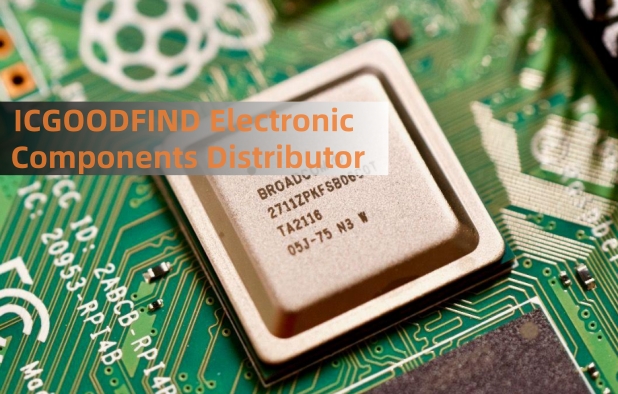
From a radio performance perspective, the chip utilizes a Direct Conversion Receiver (DCR) architecture, also known as Zero-IF. This design simplifies the radio front-end by directly converting the received RF signal to baseband, eliminating the need for intermediate frequency (IF) stages and external IF filters. This results in fewer external components, lower cost, and a more compact design. The integrated power amplifier (PA) and low-noise amplifier (LNA) are optimized for the specific requirements of the 2.4 GHz and 5 GHz bands, providing sufficient link robustness for typical home and office environments.
On the software side, the BCM4312KFBG relies heavily on proprietary firmware and drivers. Broadcom's Hybrid Driver architecture was common for this generation, combining a closed-source, platform-specific driver with a generic, open-source layer. While this ensured stability and performance on Windows platforms, it historically posed challenges for open-source operating systems like Linux, though community-driven projects like the `b43` and `wl` drivers have largely resolved these compatibility issues over time.
Despite its age, the BCM4312KFBG remains a testament to a pivotal era in wireless technology. It successfully brought reliable dual-band (2.4/5 GHz) Wi-Fi to the mass market, paving the way for the higher-performance 802.11n and 802.11ac chips that followed. Its legacy is evident in the millions of devices that stayed connected for years, powered by this robust and efficient solution.
ICGOOODFIND: The Broadcom BCM4312KFBG is a classic, highly-integrated single-chip 802.11a/b/g solution that defined mobile connectivity for its generation. Its legacy is marked by its cost-effective integration, support for dual-band operation, and the Mini PCIe form factor that became an industry standard. While surpassed by modern Wi-Fi standards, its role in popularizing wireless networking in mobile computing is undeniable.
Keywords: BCM4312KFBG, 802.11a/b/g, Integrated MAC/PHY/Radio, PCI Express Mini Card, Direct Conversion Receiver

